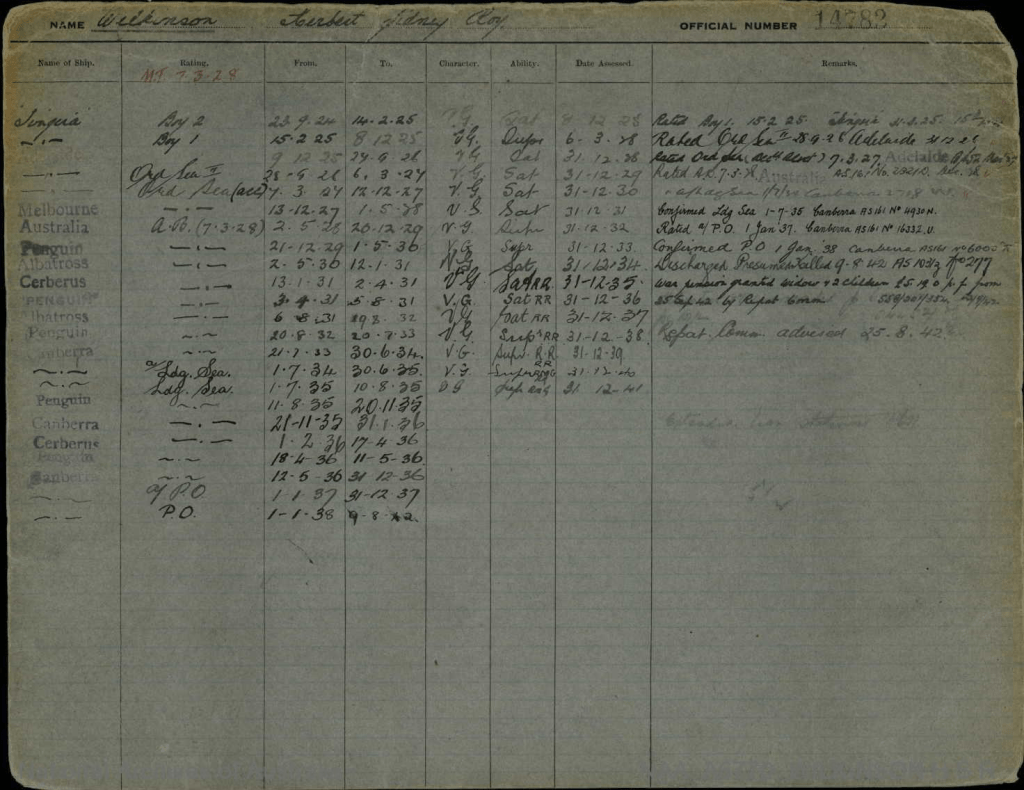
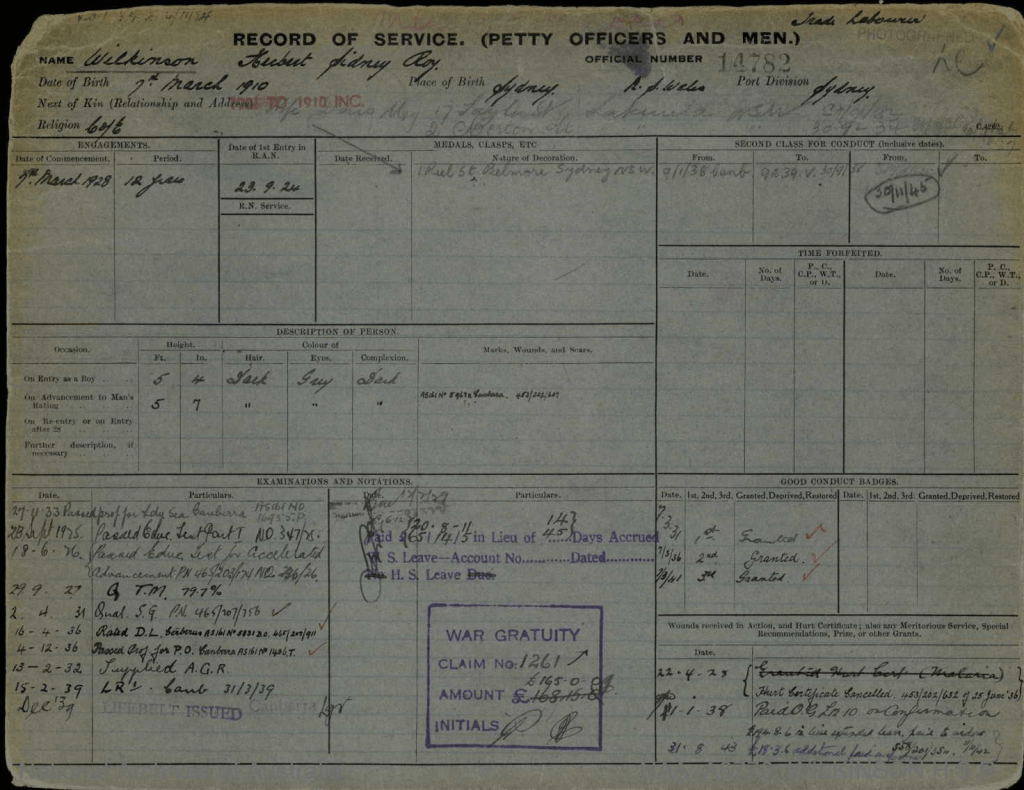
Herbert Sidney Roy Wilkinson was born on 7 March 1910 in Sydney. He was the son of William James Henry Wilkinson (1872-1952) and Amelia Caroline Breley (1870-1954). He was the younger brother of William James Henry Wilkinson (1897-1916), who was killed in France in World War I.

1924 – Joined the Navy

On 23 September 1924, Sidney joined the Royal Australian Navy. At the time he was 5″4 tall, with dark hair, grey eyes and a dark complexion.

1927-1928 – HMAS Melbourne

On 13 December 1927, Sidney joined the HMAS Melbourne which lasted until 1 May 1928, during which time the crew sailed for Portsmouth, UK.

The HMAS Melbourne was built in the United Kingdom and commissioned in January 1913. On 4 October 1913 she entered Sydney Harbour with other ships of the fleet unit. Melbourne was present at the surrender of the German High Seas Fleet on 21 November 1918. She returned to Australia in April 1919.

After the war, Melbourne carried out routine fleet duties, including exchange duties with the Mediterranean Fleet in 1926. She was disarmed and sailed for Portsmouth in 1928, her crew destined to commission the newly-built HMAS Australia [II]. Melbourne was broken up the next year in Scotland.

1928-1929 – HMAS Australia [II]

On 2 May 1928, Sidney became part of the crew of the newly-built HMAS Australia [II].

On 20 December 1929, Sydney left the Australia [II].

1929-1930 – HMAS Penguin (III)

On 21 December 1929, Sidney joined the HMAS Penguin (III).

On 1 May 1930, Sidney left the HMAS Penguin (III).

Penguin’s motto is ‘Proud to Serve.’ It is very apt and befitting a ship that has served Australia – in different guises – for longer than the Royal Australian Navy has existed. Indeed, Penguin’s have served Australia in an almost unbroken line since 1877; a tradition of service stretching for more than 135 years.”

Penguin (III) began service as HMAS Platypus, a Submarine and Destroyer Tender and Fleet Repair Ship. Platypus commissioned as Penguin (III) on 16 August 1929 and became the new depot and accommodation ship at Garden Island. Penguin (III) continued in this role until 26 February 1941 when, recommissioned HMAS Platypus, the ship resumed sea service as a Training Ship.”

1930-1931 – HMAS Albatross (I)

On 2 May 1930, Sidney joined the HMAS Albatross (I).

On 12 January 1931, Sidney left the HMAS Albatross.

HMAS Albatross (I) commissioned at Sydney on 23 January 1929 under the command of Captain Denham Bedford, RN, and began her seagoing career a week later, cruising south to Tasmania and Victoria as a unit of the RAN Squadron. The next four years followed the normal uneventful pattern of the peacetime naval vessel of the thirties on the Australia Station – winter cruises to New Guinea and New Britain and surrounding islands, spring cruises to the southern states, exercises, training and long periods in Sydney Harbour.

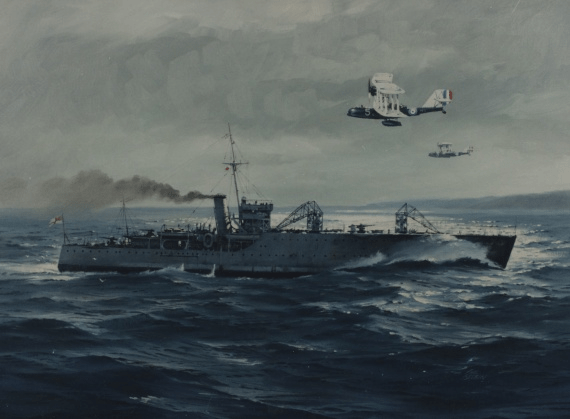
HMAS Albatross operating her Sea Gull III amphibian aircraft. Painting by Phil Belbin. (Naval Heritage Collection)

1931 – HMAS Cerberus

On 13 January 1931, Sidney joined the HMAS Cerberus, the location of the Royal Australian Navy College.

On 2 April 1931, Sidney left the HMAS Cereberus.

1931-1933 – Penguin, Albatross, Penguin

On 3 April 1931, Sidney re-joined the HMAS Penguin (III), until 5 August 1931.

On 6 August 1931, Sidney re-joined the HMAS Albatross (I), until 19 August 1932.

On 20 August 1932, Sidney re-joined the HMAS Penguin (III), until 20 July 1933.

1933 – HMAS Canberra

On 21 July 1933, Sidney joined the HMAS Canberra. He remained on this ship for the rest of his career apart from short deployments back to HMAS Penguin (III) (1935 and 1936) and HMAS Cerberus (1936).

1937 – Promotion to Petty Officer

On 1 January 1937, Sidney was rated as a Petty Officer.

On 1 January 1938, Sidney was confirmed as a Petty Officer.

A Petty Officer (PO) in the Royal Australian Navy (RAN) is a non-commissioned officer. They are superior to a seaman, and below the rank of Chief Petty Officer. The role is a major career milestone requiring a shift from simply following orders to identifying problems and actively presenting solutions.

HMAS Canberra History – Sea Power Centre Australia
https://seapower.navy.gov.au/history/units/hmas-canberra-i

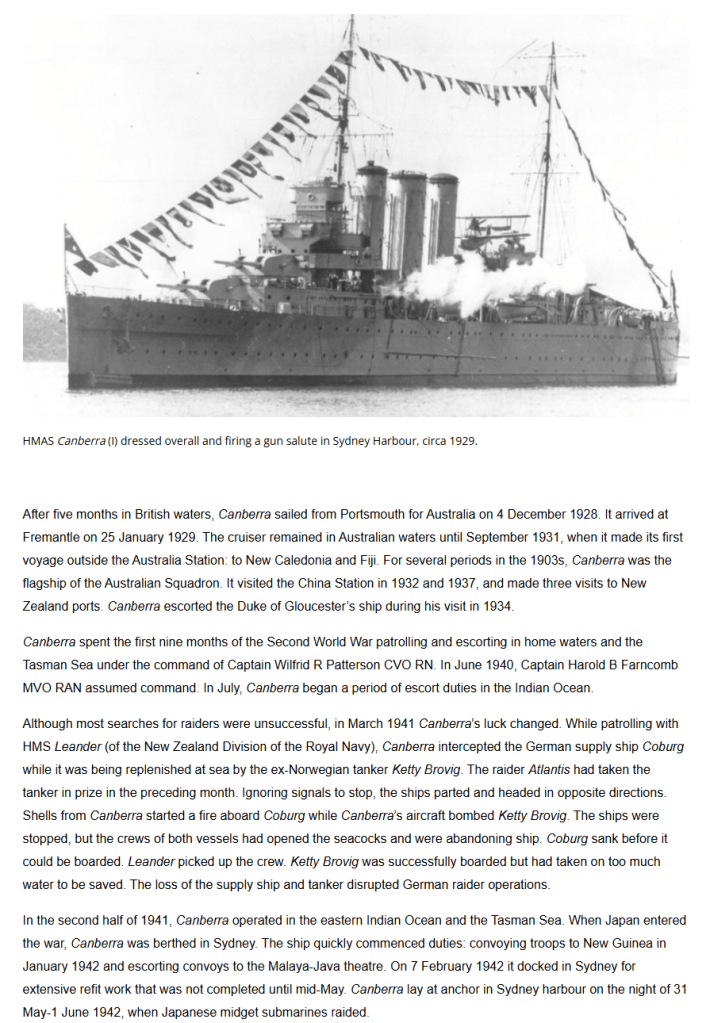
HMAS Canberra (I) was a 10,000-ton County-class heavy cruiser. In the Second World War, it served as an escort and patrol ship in the oceans surrounding Australia and in the South West Pacific area of operations. Canberra took part in the US-led campaigns at Guadalacanal and Tulagi, where it was sunk in the 1942 Battle of Savo Island.

Canberra was one of two Kent-Class variants of the County-Class cruisers ordered by the Australian government under a five-year naval development program from 1924 to 1929. Its sister ships were HMAS Australia and HM Ships KentBerwickCornwallCumberland and SuffolkCanberra was commissioned at Clydebank (near Glasgow) on 9 July 1928 under the command of Captain George L Massey RN.

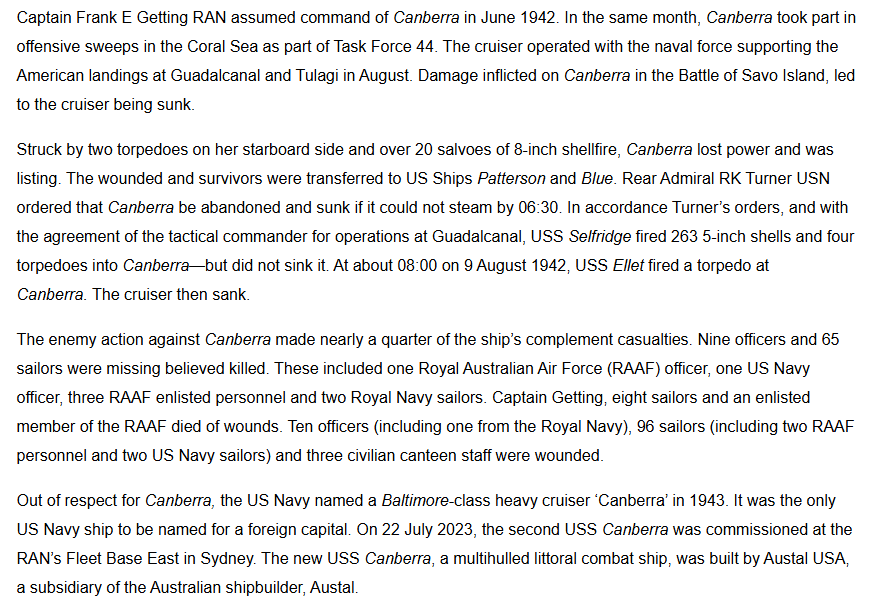
9 August 1942 – Killed onboard the HMAS Canberra during the Battle of Savo Island

From the Australian War Memorial:

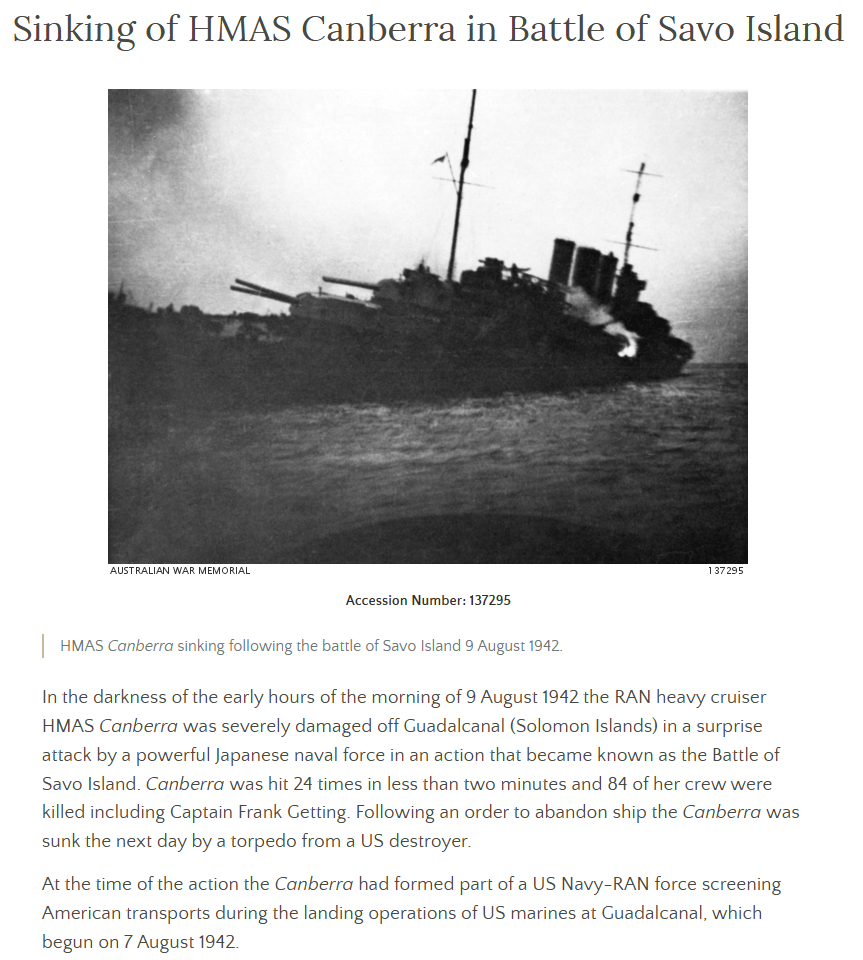
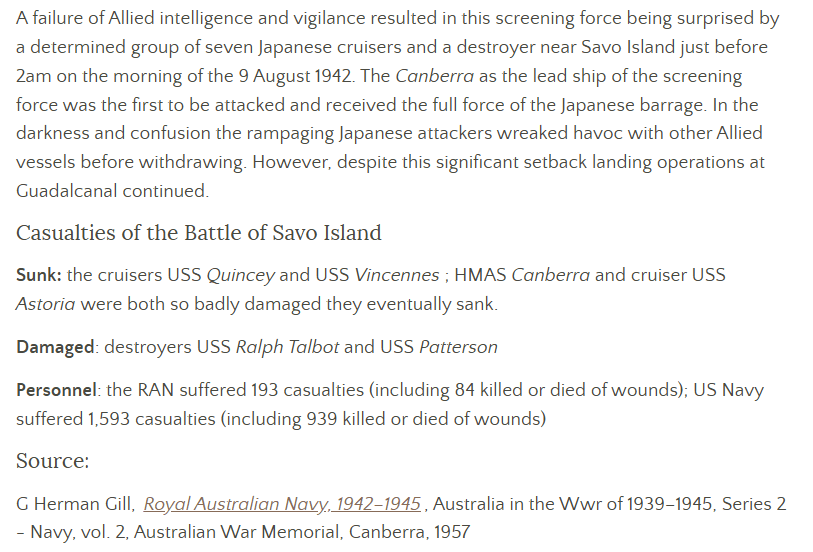
In the darkness of the early hours of the morning of 9 August 1942 the RAN heavy cruiser HMAS Canberra was severely damaged off Guadalcanal (Solomon Islands) in a surprise attack by a powerful Japanese naval force in an action that became known as the Battle of Savo Island. Canberra was hit 24 times in less than two minutes and 84 of her crew were killed including Captain Frank Getting. Following an order to abandon ship the Canberra was sunk the next day by a torpedo from a US destroyer.

At the time of the action the Canberra had formed part of a US Navy-RAN force screening American transports during the landing operations of US marines at Guadalcanal, which begun on 7 August 1942.

A failure of Allied intelligence and vigilance resulted in this screening force being surprised by a determined group of seven Japanese cruisers and a destroyer near Savo Island just before 2am on the morning of the 9 August 1942. The Canberra as the lead ship of the screening force was the first to be attacked and received the full force of the Japanese barrage. In the darkness and confusion the rampaging Japanese attackers wreaked havoc with other Allied vessels before withdrawing. However, despite this significant setback landing operations at Guadalcanal continued.

Australian War Memorial

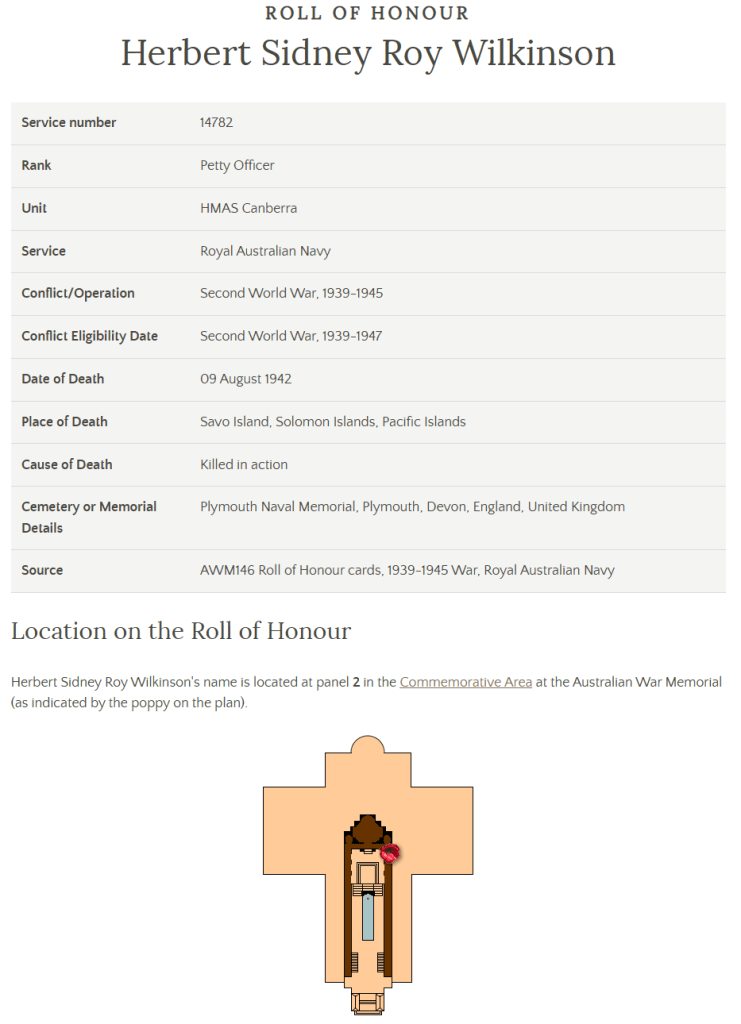
Sidney is commemorated at the Australian War Memorial.

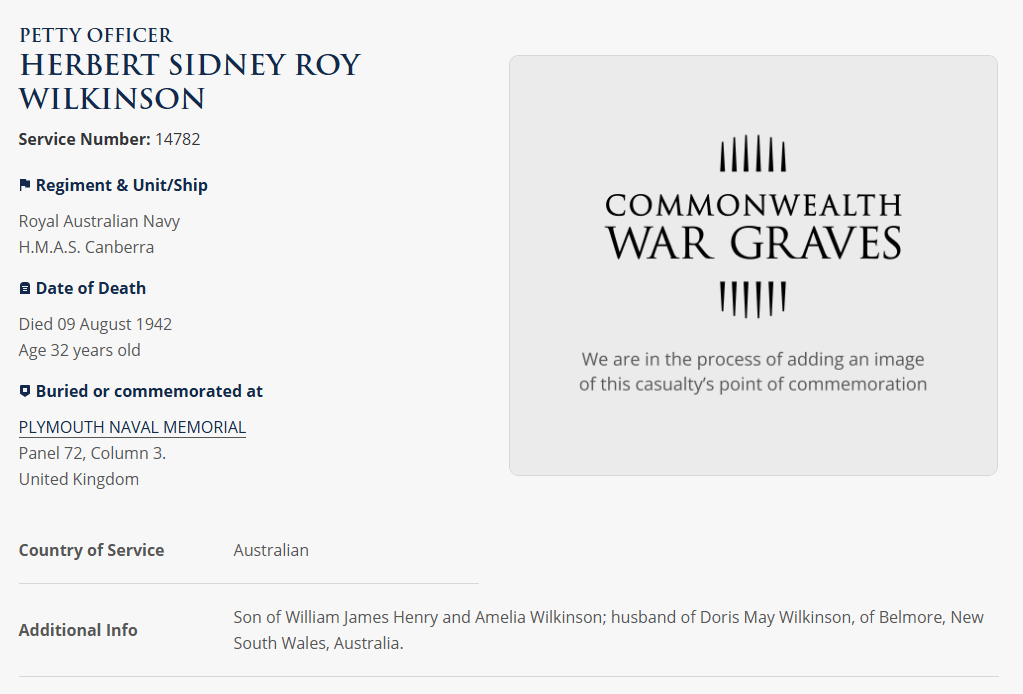
Commonwealth War Grave – Plymouth Naval Memorial

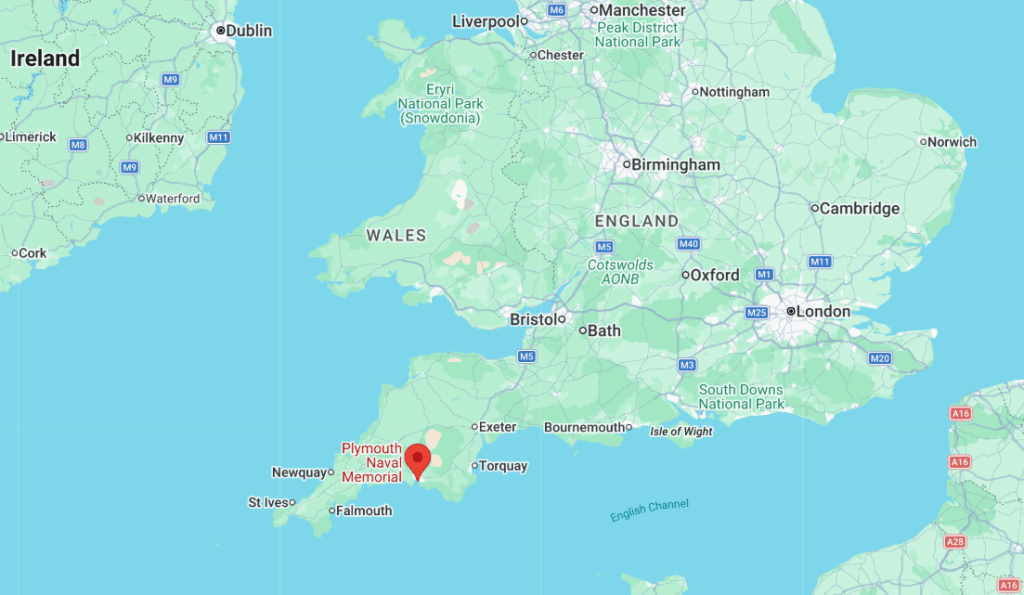
Sidney is commemorated at the Plymouth Naval Memorial.